
This appendix summarizes the most commonly-used Python languagefeatures in the textbook.
In Python, lists can be added to each other using the plus symbol +. As shown in the code block, this will result in a new list containing the same items in the same order with the first list’s items coming first. Note: This will not work for adding one item at a time (use.append method). In order to add one item, create a new list with a. Lists are similiar to arrays with bidirectional adding and deleting capability. Python Regex Cheat Sheet. Writing to an excel sheet using Python.
Hello, World.
Editing, compiling, and interpreting.
Built-in data types.
Assignment statements and traces.
Strings.
Integers.
Floating-point numbers.
Booleans.
Comparison operators.
Common functions.
Type conversion.
if and if-else statements.
if-elif-else statements.
while and for statements.

break statements.
Arrays.
Array operations.
Array aliasing and copying.
Two-dimensional arrays.
Our stdio module: writing functions.
Our stdio module: reading functions.
Our stddraw module.
Our stdaudio module.
Redirection and piping.
Functions.
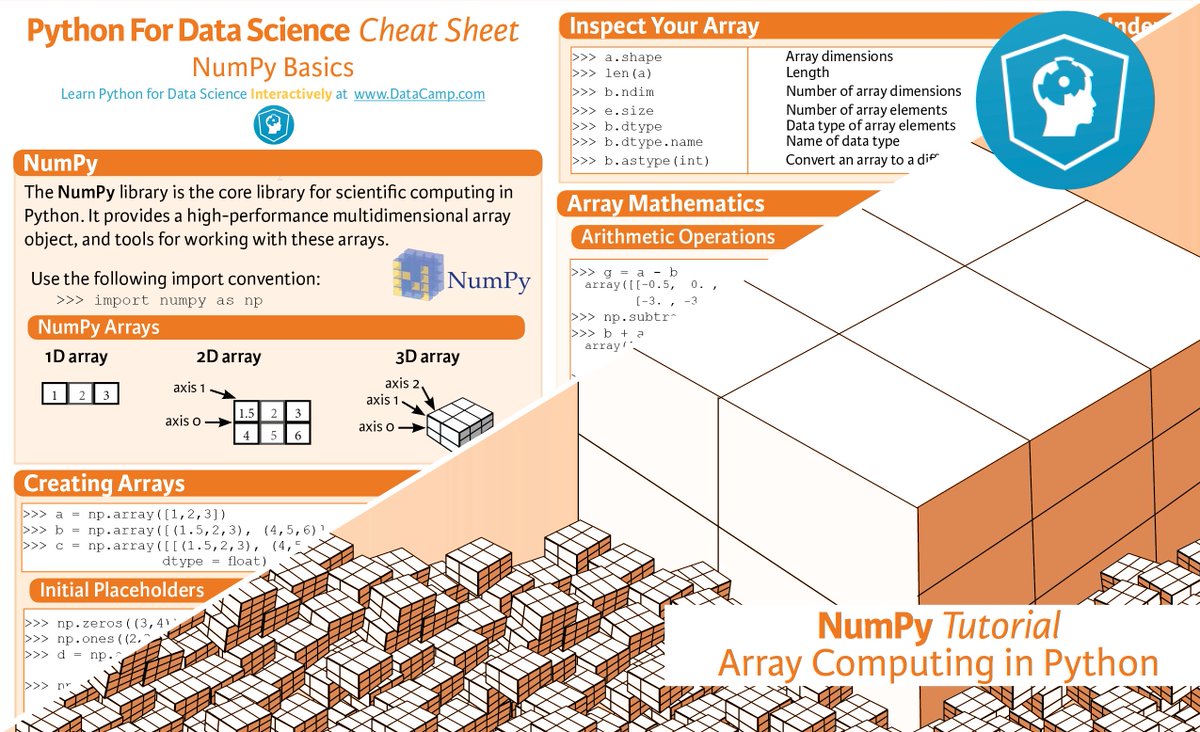
Python Array Cheat Sheet Answer
Modules.
Our stdrandom module.

Our stdarray module.
Our stdstats module.
The str data type.
Python Cheat Sheet Download

Our Color data type.
Our Picture data type.
Our InStream data type.
Our OutStream data type.
Defining a class.
Creating an object.
Using an object.
p = c1.potentialAt(.20, .50)Special methods.